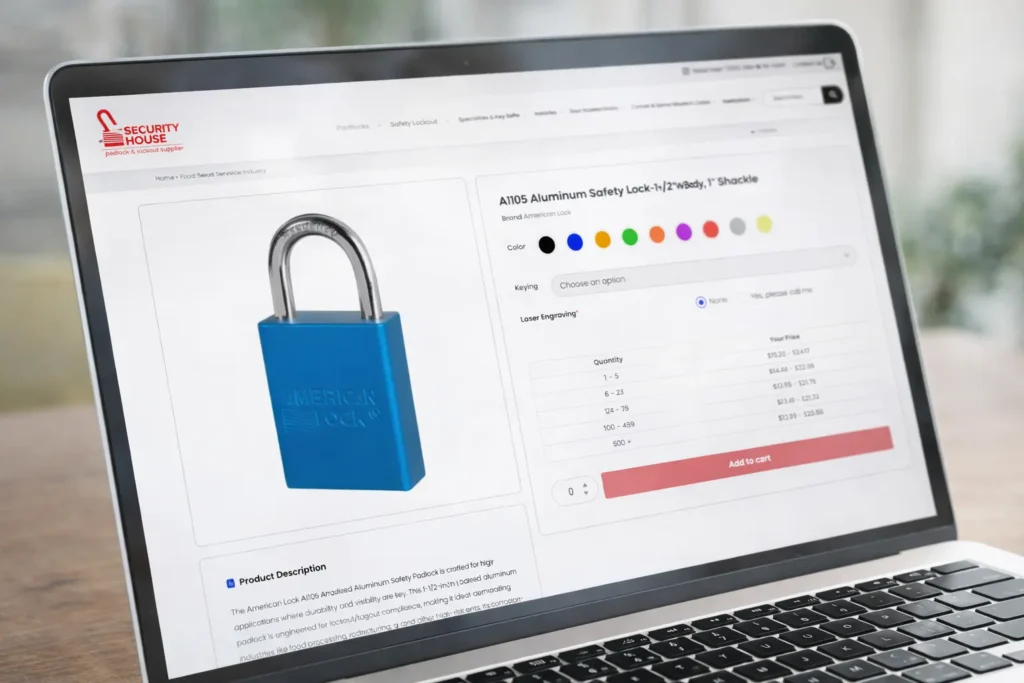
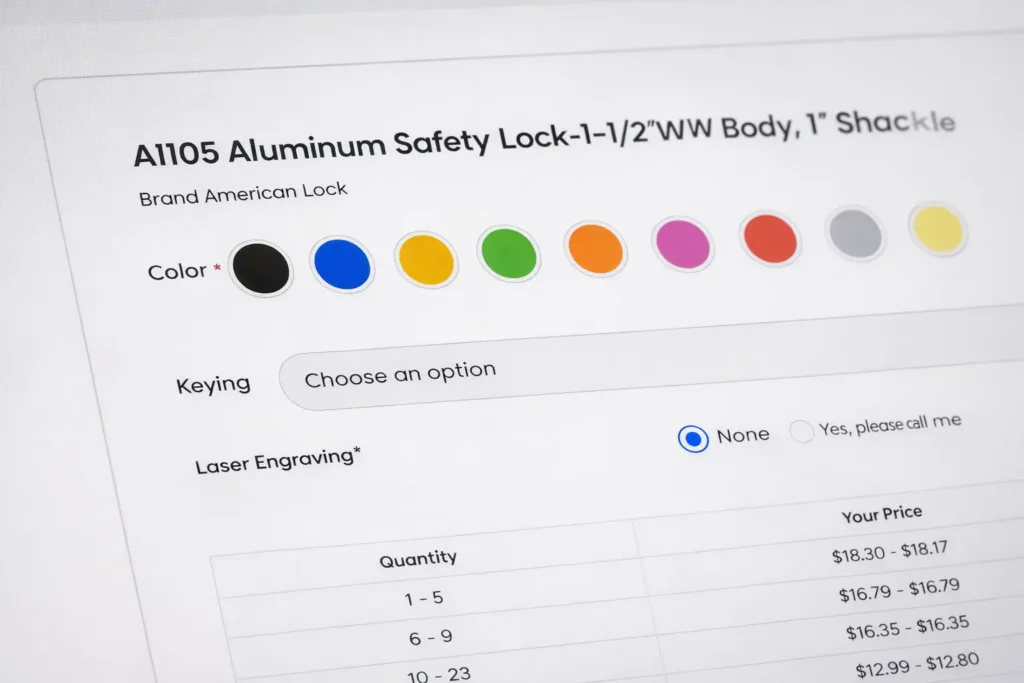
I designed and built B2B-first ordering workflows for the Security House and Padlock Distributors sites to match real commercial purchasing—repeat orders, multi-location shipping, and account-based controls. The platform was implemented in WordPress/WooCommerce with custom functionality built in PHP, leveraging WooCommerce actions/filters to extend core cart/checkout behavior without breaking upgrade paths. A key feature was a reorder flow that allows buyers to repurchase previous orders while preserving the full product configuration—including variations, attributes, add-ons, and custom option metadata—so customers can reorder complex padlock-part setups accurately and quickly. This was handled by mapping historical order item meta back into cart line items, validating against current catalog rules, and ensuring pricing logic remained consistent for wholesale accounts.
For checkout, I built a structured B2B experience with conditional payment methods and enforced company policies such as locking billing and/or shipping fields when required. Checkout rules were driven by account type and permissions, enabling scenarios like invoice-based payment for approved customers, restricted shipping destinations for specific branches, and standardized billing details for procurement compliance. I also used ACF fields to manage structured business data—such as company profiles, allowed locations, billing rules, payment eligibility, and internal roles—so administrators could update policies and customer settings from the WordPress admin without code changes. Where needed, custom admin tooling was added to reduce manual overhead and keep data consistent across users, companies, and locations.
To support multi-user organizations, I developed a company-based dashboard where authenticated users can view order history across their organization (based on role/permissions) and collaborate without losing visibility—useful for purchasing teams, managers, and staff ordering for different sites. The system supports multi-account and multi-location switching, allowing users to quickly change active company/location contexts (e.g., branch A vs branch B) without logging out, while keeping pricing, checkout rules, and available shipping/payment options aligned to the selected account. These features were delivered alongside tiered/customer-specific pricing logic, plus ongoing improvements to technical SEO and performance, including structured optimization and refactoring for maintainability at scale.